![Rfid Tag manufacturer [Wholesale | OEM | ODM]](https://intellicolding.com/wp-content/uploads/2025/10/INTELLICOLD-Logo-1.webp)
—In-depth analysis of INTELLICOLD air handling and purification units
In the smog-ridden winter, opening the window often brings not a refreshing smell, but the pungent odor of PM2.5; less than a month after moving into a newly renovated home, a child starts to have a runny nose and cough; in the cleanroom of an electronics factory, a single 0.1μm dust particle can render an entire batch of chips unusable… Behind these scenarios lies the same need—clean air.
I. What is the ultimate goal of clean air?
The very first sentence of the national standard “Code for Design of Cleanrooms” GB50073-2013 clearly states: “The purpose of air purification is to purify polluted air to the state required for production and daily life, or to achieve a certain level of cleanliness.”
In layman’s terms, it’s just two sentences:
- For people: The air I breathe must not make me sick;
- For products: The particles, bacteria, and gases in the air must not spoil my products.
It seems simple, but achieving excellence is extremely difficult. What INTELLICODE air handling units have been doing for the past 12 years is taking these two sentences to the next level in the industry.
II. Everyday life scenarios: Making the “invisible killer” nowhere to hide.
A 2024 study by the Department of Allergy at Peking Union Medical College Hospital showed that in the Beijing area, the incidence of childhood asthma is significantly positively correlated with indoor PM2.5 concentration; for every 10 μg/m³ increase, the risk of acute asthma attacks increases by 17.3%.
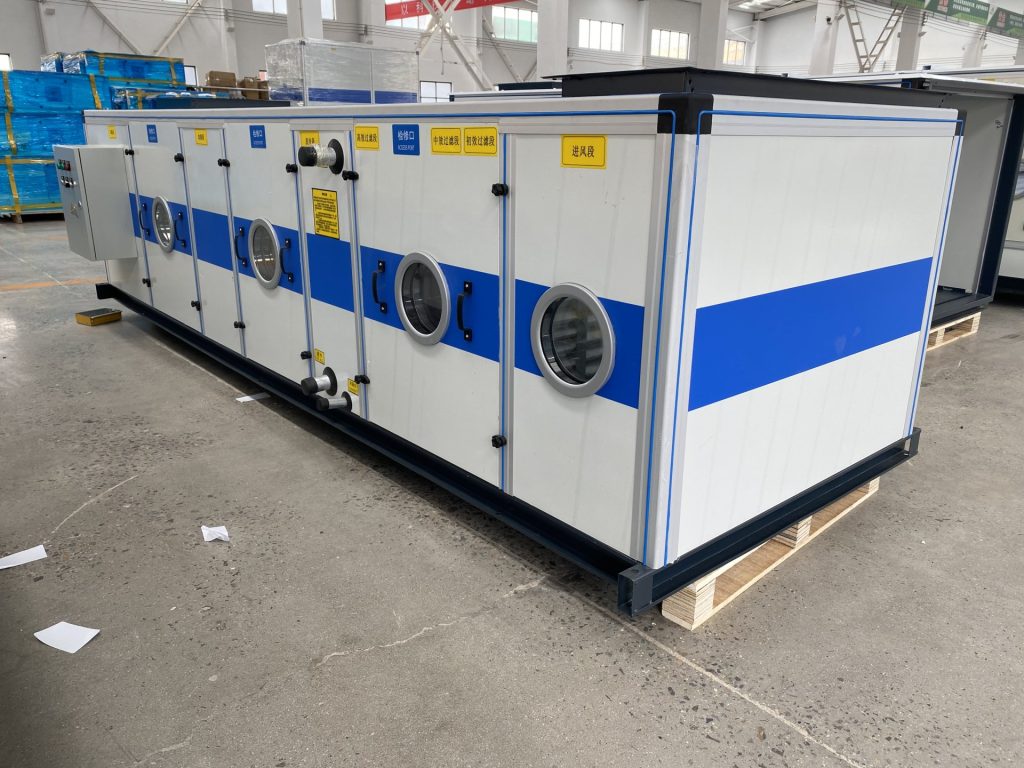
A real-life case from a mother in Haidian District, Beijing (authorized for publication) in January 2025: My child is 8 years old and suffers from recurrent bronchitis, making them afraid to go outside on smoggy days. After installing an INTELLICOLD home-grade air handling unit in November 2024:
- Before installation: Indoor PM2.5 average 86 μg/m³, with windows closed on heavily polluted days, the child coughed 12-18 times per night;
- 7 days after installation: Indoor PM2.5 dropped to an average of 6 μg/m³, and nighttime coughing decreased to 3-5 times;
- 30 days after installation: Indoor PM2.5 stabilized at an average of 4 μg/m³, and nighttime coughing basically disappeared (0-1 times), and the doctor discontinued one inhaled corticosteroid.
IC-H3000 Third-Party SGS Testing Core Parameters:
- Clean Air Delivery Rate (CADR for particulate matter) 3100 m³/h, CADR for formaldehyde 1800 m³/h;
- Cumulative Clean Mass (CCM for particulate matter) reaches P4 (highest level) (over 60000 mg),
- CCM for formaldehyde reaches F4 (highest level) (over 15000 mg);
- Maximum airflow noise is only 66 dB, sleep mode 26 dB; 24-hour energy consumption is only 0.9-1.2 kWh, even more energy-efficient than a regular refrigerator.
We’ve adapted the H14-grade HEPA filter (99.999% filtration efficiency for 0.1μm particles) used in hospital operating rooms for civilian products, and combined it with medical-grade photoplasma and dual high-voltage electrostatic adsorption modules to achieve a three-in-one effect of sterilization, formaldehyde removal, and dust removal.
A March 2025 inspection by the Beijing Center for Disease Control and Prevention showed that after 30 minutes of operation, the removal rate of Staphylococcus aureus was 99.97%, and the removal rate of H1N1 influenza virus was 99.99%.

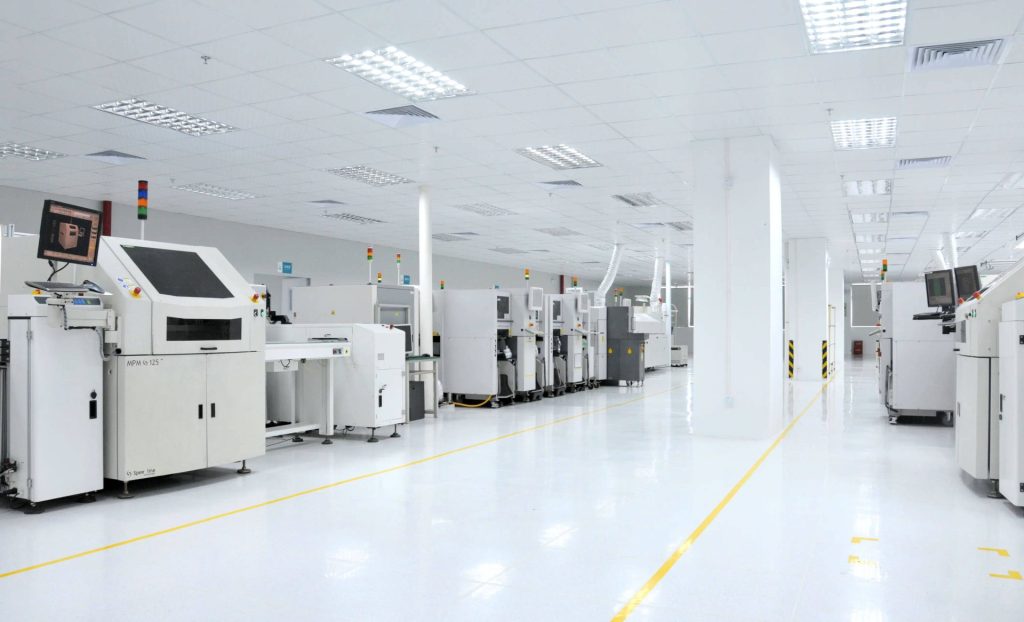
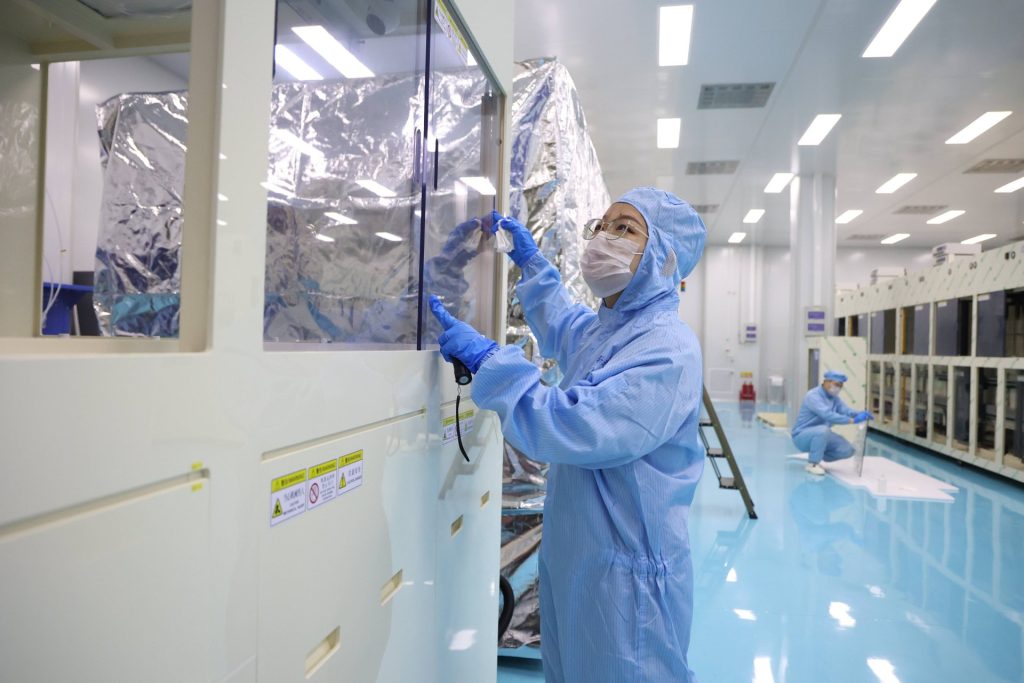
III. Industrial Scenarios: 0.1-micron dust particles determine yield rates worth millions of dollars.
In 2024, a leading 8-inch wafer foundry in China had to scrap an entire batch of 12-inch wafers due to excessive levels of particles ≥0.3μm in a localized area of its cleanroom, resulting in a loss of over 18 million yuan.
The factory subsequently replaced all the original imported brands with INTELLICOLD industrial-grade series units. We achieved a cleanliness level of ISO 5 (Class 100) with a particle size of ≥0.5μm of ≤70 particles/ft³, which is 30% stricter than the national standard.
A third-party particle counting report from June 2025 shows:
- Photolithography area: Before replacement 128-296 particles/ft³, after replacement 42-68 particles/ft³;
- Etching area: Before replacement 87-164 particles/ft³, after replacement 31-59 particles/ft³;
- Packaging and testing area: Before replacement 1200-2800 particles/ft³, after replacement 680-940 particles/ft³, all consistently meeting ISO 5-6 requirements.
A year later, the factory’s overall yield increased from 91.7% to 94.3%, which, based on a monthly wafer input of 3,000 wafers, resulted in an additional profit of nearly 40 million yuan in just over a year.
IV. Pharmaceutical GMP Scenario: A Grade A Zone with a Grade B “China Solution”
The 2024 edition of the Chinese Pharmacopoeia has extremely high requirements for Grade A areas of sterile preparations: static particles ≥5.0μm must be 0, dynamic particles ≤20 particles/m³, and unidirectional airflow velocity 0.36-0.54m/s.
In 2025, INTELLICOLD provided a single IC-P60000 air handling unit with an air volume of 60,000 m³/h to a new GMP injection workshop in Jiangsu Province. The actual test results from the national GLP certification body were all significantly better than those in the pharmacopoeia.
- Static: Only 876 particles ≥0.5μm/m³ (requirement ≤3520), 0 particles ≥5.0μm/m³;
- Dynamic: Only 4-11 particles ≥5.0μm/m³ (requirement ≤20);
- Stable unidirectional airflow velocity: 0.42-0.48 m/s;
- Air exchange rate in the Class B background zone reaches 68 times/hour (requirement ≥40);
- Settling bacteria: Only 0.3 CFU/plate (requirement ≤1 CFU).
The workshop successfully passed the EU QP on-site audit in one go, becoming one of the very few injectable production lines in China to pass the EU GMP certification with “zero defects” in 2025.
V. Why can IntelliCold do this?
There are only three reasons:
- Extreme Filtration Efficiency: Adheres to genuine H14 medical-grade HEPA filters (EN1822 standard), achieving a filtration efficiency of ≥99.999% for the most easily penetrating particle size (MPPS). Never uses H13 as a substitute.
- Self-developed Dual High-Voltage Electrostatic + Photoplasma Composite Module: Capable of adsorbing 0.01μm ultrafine particles while completely breaking down formaldehyde, TVOCs, and viral proteins.
- High-Efficiency Operation Technology Across All Temperature Ranges: Features unique intelligent cold energy recovery and variable frequency heat pump technology, achieving an energy efficiency ratio of up to 6.8 (more than twice the national first-class energy efficiency rating). Stable operation is possible from -30℃ in Siberia to +50℃ in Dubai.
VI. In conclusion
Clean air is never just a “nice-to-have,” but a matter of “life and death”: For children, it’s about whether they can get a good night’s sleep; for patients, it’s about whether they will get an infection after surgery; for factories, it’s about whether they make tens of millions or hundreds of millions in profits.
INTELLICODE’s mission can be summed up in one sentence:
Let every breath of air we breathe be worthy of the word “clean”.
If you also believe that air quality deserves to be taken seriously, please visit our website to learn more:
https://www.intellicolding.com


