![Rfid Tag manufacturer [Wholesale | OEM | ODM]](https://intellicolding.com/wp-content/uploads/2025/10/INTELLICOLD-Logo-1.webp)
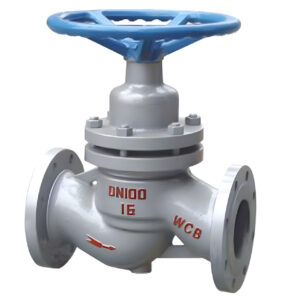
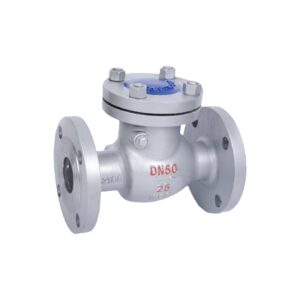
Under the guidance of the “dual carbon” goals, centralized urban cooling and heating have become a key path to improve energy utilization efficiency and reduce carbon emissions. Centrifugal water chillers, with their core advantages such as large single-unit cooling capacity, high energy efficiency ratio and long service life, have become the preferred equipment in large commercial complexes, industrial parks, data centers and other scenarios. They not only support the daily temperature control needs of cities, but also promote the green transformation of building energy systems.
I. Core Technology: The scientific logic of matching energy efficiency with working conditions
The efficient operation of centrifugal water chillers stems from their unique technical principles and strict energy efficiency standards. All key performance indicators have clear scientific definitions and industry norms.
1.Analysis of Core Energy Efficiency Indicators
COP (Refrigeration Energy Efficiency Ratio) : It measures the energy conversion efficiency under rated operating conditions. Water chillers must comply with the GB 19577-2015 standard. Among them, the COP of centrifugal units with a cooling capacity of ≥1500kW is ≥4.50, and the COP of first-class energy efficiency units even reaches the high standard of ≥6.00. The application of magnetic levitation technology has further broken through the energy efficiency ceiling. The COP of Suzhou Hemei’s magnetic levitation centrifugal unit has reached 11.98, setting a new industry record.
IPLV (Combined Partial Load Performance Coefficient) : It is more in line with the actual working conditions of urban buildings, where “full-load operation time is short and partial load proportion is high”. It is calculated through weighted COP under 100%, 75%, 50%, and 25% loads. The IPLV of the first-class energy efficiency centrifugal unit is ≥7.50, and that of the magnetic levitation model can be increased to 26. Compared with traditional units, it saves 30% to 40% of energy.
APF (Annual Performance Coefficient) : For combined cooling and heating scenarios, it comprehensively considers the full-load fluctuations during the cooling and heating seasons. It is the core selection index for urban heating and cooling integrated projects. Prioritizing units with an APF of ≥4.0 offers greater long-term energy-saving value.
2.Advantages in adapting to urban scenarios
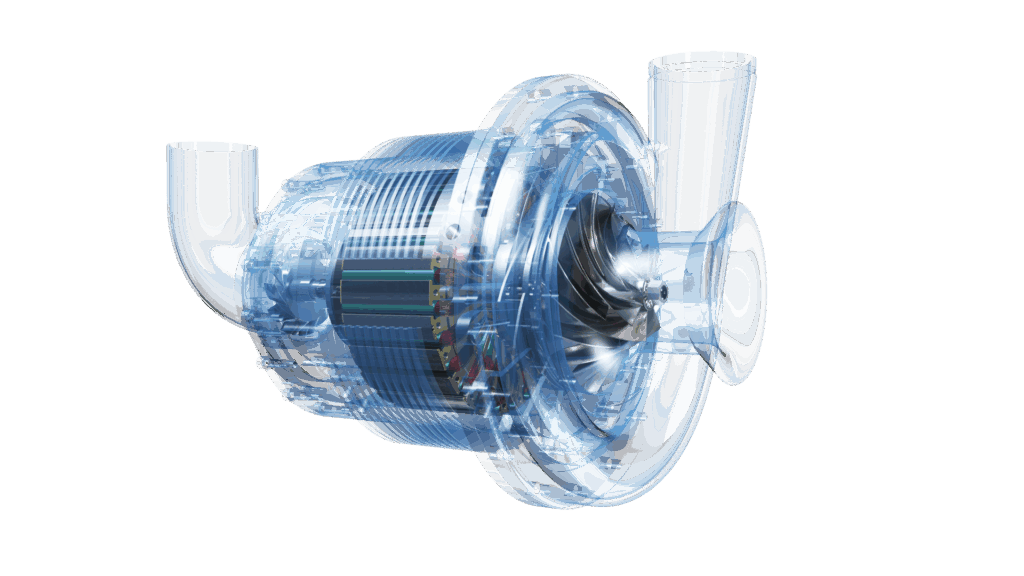
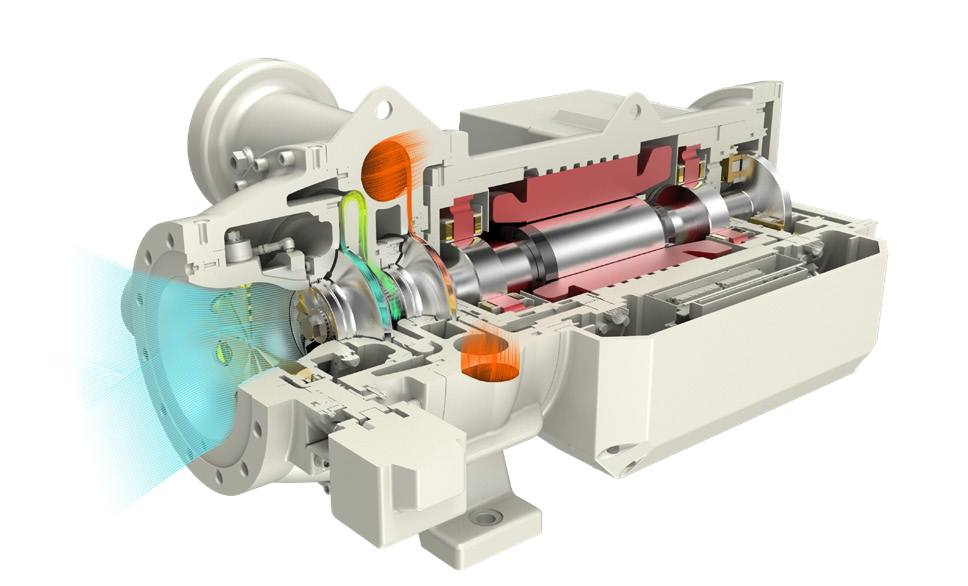
Centrifugal units generate centrifugal force through high-speed rotating impellers to compress the refrigerant. The single-unit cooling capacity can range from 150RT to over 3000RT, perfectly matching the centralized energy supply demands of large urban building complexes. Modern two-stage centrifugal units reduce the surge critical point to 10% load through air replenishment technology. Combined with variable frequency speed regulation technology, they can adapt to the load fluctuations during the daytime peak and nighttime off-peak in cities, maintaining efficient operation within the load range of 40% to 100%.
Ii. Urban Applications: Data-Supported Energy Conservation and Carbon Reduction Practices
The performance of centrifugal water chillers in urban energy supply has been verified through long-term operation data from multiple benchmark projects, and their energy-saving benefits and environmental protection value are particularly significant.
- A new benchmark for cold and heat combined supply in the park: Zhengzhou Science Valley Digital Town
As the largest demonstration project of clean energy cooling and heating with deep and shallow underground buried pipes in the country, the Digital Town of Science Valley in Zhengdong New District, Zhengzhou, has adopted 11 Ebara high-efficiency centrifugal chiller (heat pump) units to provide cooling and heating services for buildings with a total construction area of 1.23 million square meters.
Core configuration: 6 centrifugal chiller (heat pump) units + 7 centrifugal heat pump units + 2 dual-condition ice storage units, with a total cooling capacity of 32MW.
Environmental benefits: Through the geothermal utilization model of “heat extraction without water extraction”, it completely replaces traditional coal-fired heating, achieving “zero carbon emissions”. It can save a large amount of natural gas resources every year and become a national demonstration of low-carbon heating.
Operational performance: It operates stably under complex conditions such as deep and medium-depth undisturbed heat exchange and the most unfavorable winter conditions. The system’s energy efficiency far exceeds that of traditional distributed energy supply schemes.
- Model of energy-saving renovation for existing buildings: Beijing Construction Engineering Building
The Beijing Construction Engineering Building has adopted four Clement magnetic levitation centrifugal water chillers to replace the old lithium bromide direct-fired system, meeting the cooling demands of 65,000 square meters of office buildings.
Energy-saving data: The full-load COP of the original lithium bromide unit was only 1.0. After the renovation, the IPLV of the centrifugal unit performed exceptionally well. Calculated based on a 150-day cooling season in Beijing with an average daily operation of 12 hours, energy consumption was significantly reduced, and the labor cost for operation and maintenance was cut by 50%.
Adaptation advantages: Two 880kW units cover low-load periods (with a minimum output power of only 88kW), and two 1230kW units handle peak loads in summer. They still operate stably at an extreme wet-bulb temperature of 29.4℃.
Added value: The oil-free magnetic levitation bearing design achieves zero mechanical friction, with operating noise as low as 73 decibels, significantly enhancing the comfort of the office environment. - Efficient energy supply for commercial complexes: A certain complex in Shanghai
This project applies the Suzhou Hemei magnetic levitation centrifugal cold station and achieves multiple benefit improvements through technological innovation.
Energy efficiency breakthrough: The IPLV of the unit reached 26, the overall energy efficiency of the air conditioning system increased by 35%, and the annual electricity cost savings exceeded 3 million yuan.
Space optimization: By using graphene-modified thermal conductive materials, the volume of the condenser is reduced by 20%. Combined with the outdoor installation design, it significantly saves the area of the machine room.
Emission reduction contribution: The annual electricity savings are equivalent to a reduction of 816 tons of carbon emissions, providing a replicable solution for the low-carbon transformation of urban commercial buildings.
Iii. Industry Trends: Dual Upgrades Driven by Technological Iteration and Policies
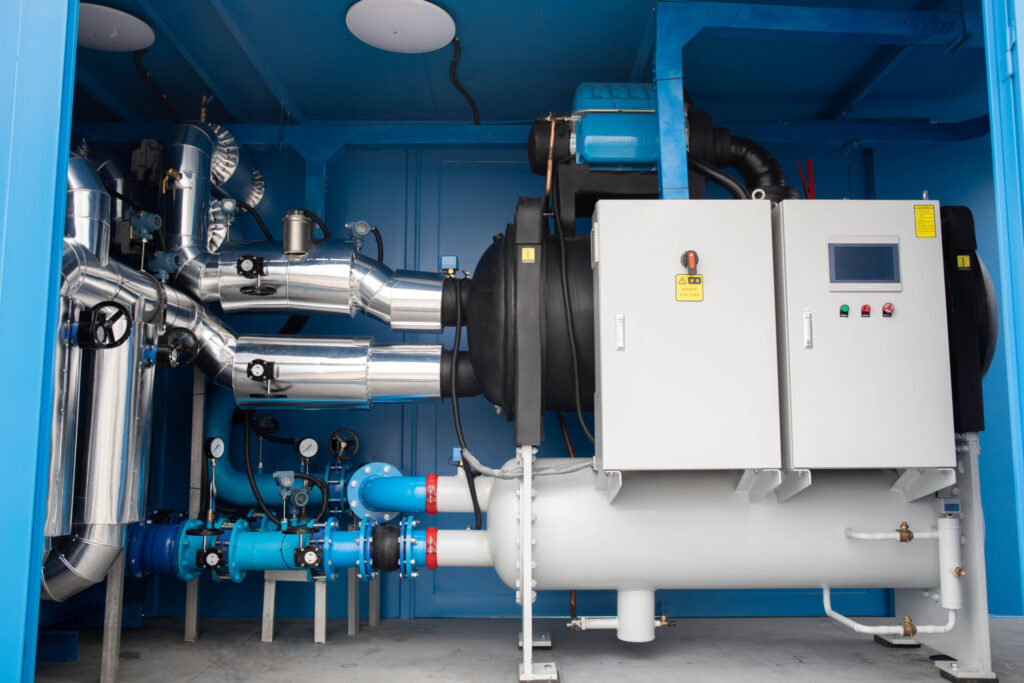
In the next five years, the penetration rate of centrifugal water chillers in urban energy supply will continue to rise, a trend driven by both technological innovation and policy guidance.
- Technological development direction
Energy efficiency continues to break through: The popularization of technologies such as magnetic levitation, variable frequency speed regulation, and oil-free compression has enabled the IPLV of units to move towards over 30. The magnetic levitation products of enterprises like Shuangliang Energy Conservation have achieved electricity savings of 40% to 50% compared to traditional units.
Intelligent upgrade: Through the AI energy efficiency optimization system and digital twin technology, load forecasting, adaptive adjustment and predictive maintenance are achieved. The “Cold Cloud” platform of Suzhou Hemei can generate over 200 energy-saving strategies, with the average energy-saving rate increased to 35%.
Environmentally friendly refrigerant substitution: Low-GWP refrigerants such as R32 and R290 are gradually replacing traditional products, in line with global environmental protection policy requirements. - Policy and market-driven
Energy efficiency standards upgrade: China’s “Comprehensive Work Plan for Energy Conservation and Emission Reduction during the 14th Five-Year Plan Period” clearly promotes the use of centrifugal water chillers with an energy efficiency ratio higher than 5.0. Directives such as Energy Star and EPAC in Europe and the United States also continuously raise the entry threshold.
Expansion of application scenarios: Data centers, industrial cooling, and urban centralized energy supply projects are growing rapidly. It is estimated that the global data center cooling market size will reach 12 billion US dollars by 2025. Centrifugal units have become the core choice due to their PUE optimization capability (which can reduce by 0.15-0.20).
Conclusion
Centrifugal water chillers, with their scientific and rigorous technical design, energy-saving data verified by practice and wide urban adaptability, have become the core equipment of urban centralized energy supply systems. From the green planning of newly-built industrial parks to the energy-saving renovation of existing buildings, it not only provides stable and reliable heating and cooling guarantees for the city, but also plays a key role in the implementation of the “dual carbon” goals. With the continuous iteration of technology and the in-depth empowerment of policies, centrifugal water chillers will play a greater role in the future urban energy system, driving cities towards a new stage of more efficient and low-carbon development.


